In The City of Presidents (and Nearby), Some Signs Lead to JFK

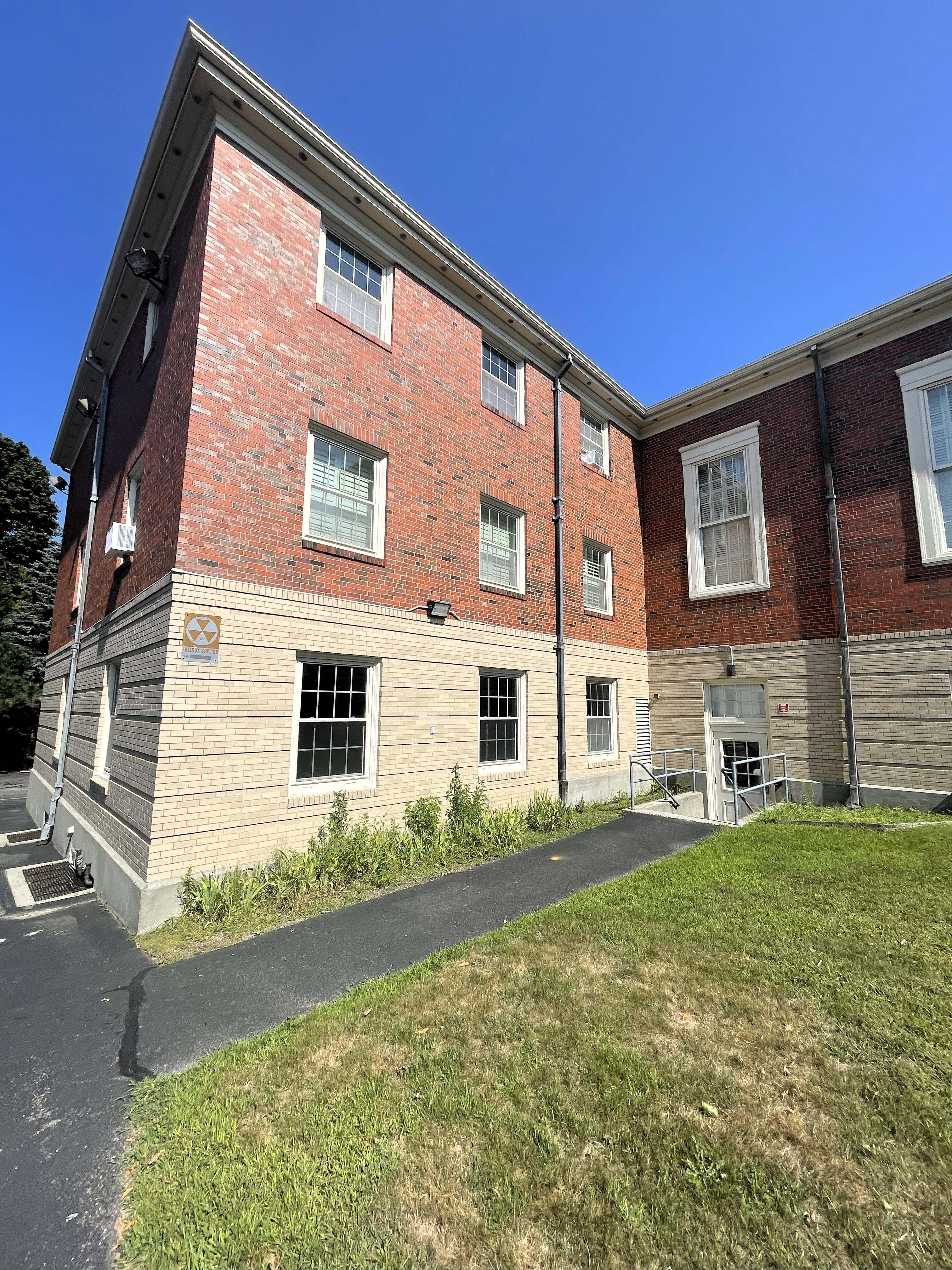
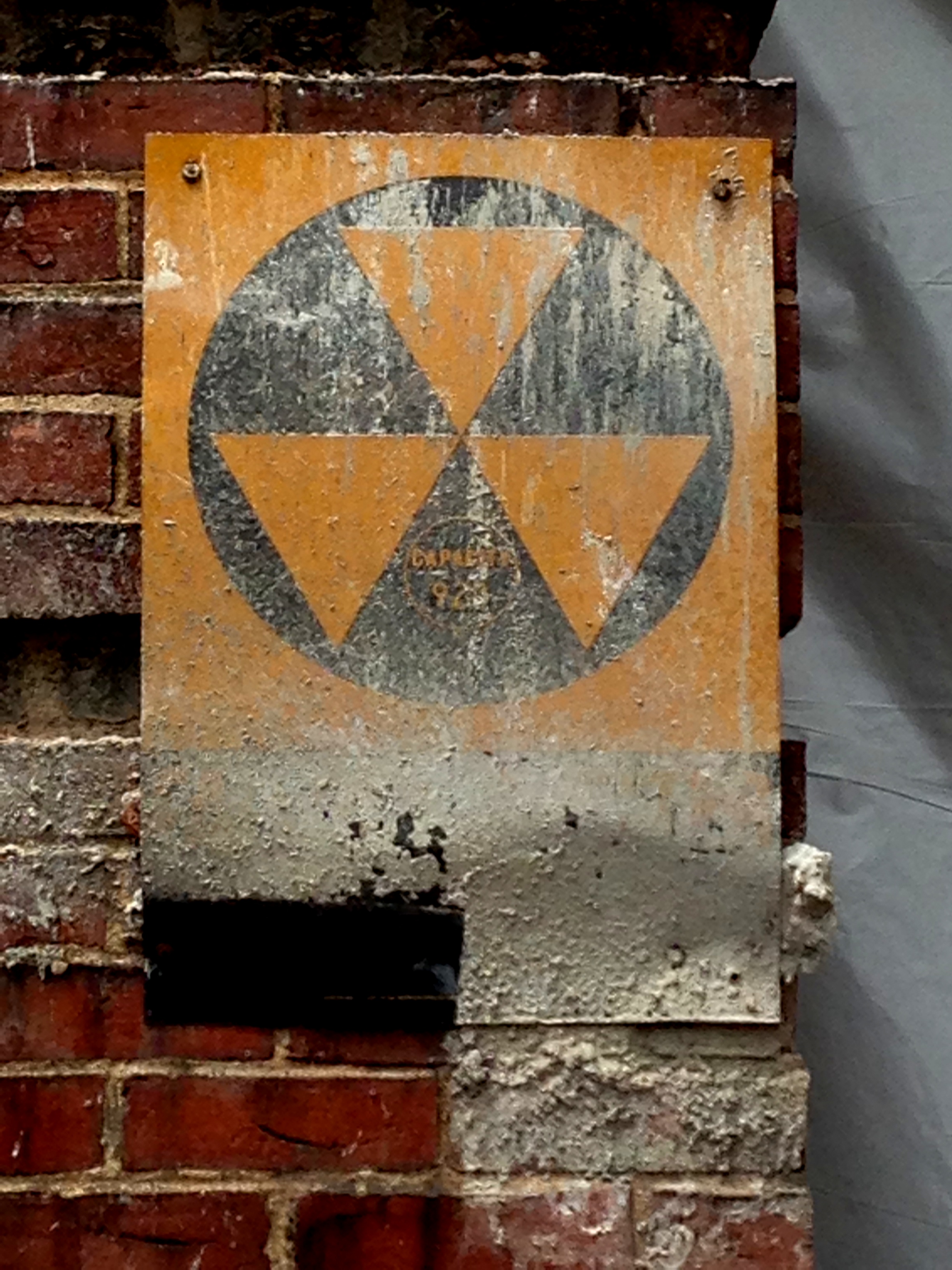
A question came in from someone who visited the site asking if a Fallout Shelter sign that had been on this apartment building at 200 Presidents Lane in Quincy was still there.

Quincy is a city of around 101,000 residents next to Boston, and known as the “City of Presidents” due to it being the birthplace of both John Adams and John Quincy Adams.

A visit revealed that the sign was still in fact there, on the left side of the building.

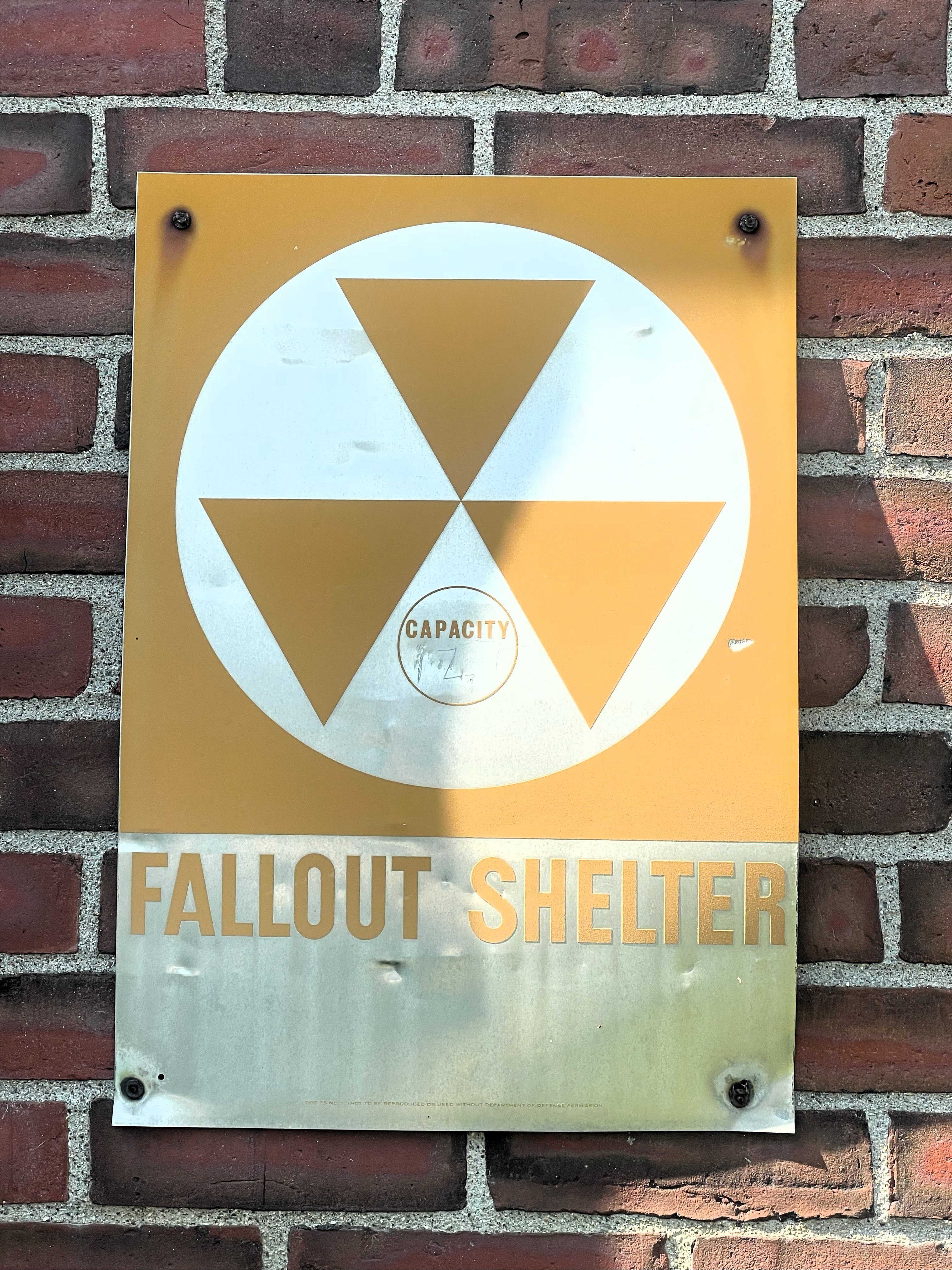
Although a straight-on shot was not possible due to the location of the sign, and the capacity is faded, a quick zoom-in looks like it reads 150.

A chat with a nice resident who was outside revealed that what was the shelter area in the basement is now laundry, and no interior signs remain in the building.

Not too far away, another exterior sign was seen at the First Presbyterian Church on Franklin Street.

The first number of the capacity was missing but the shadow appears to have been a 6, for a capacity of 60.

A quick walk around the building showed a set of stairs down to a basement door, but no other signs.

So, why the reference to JFK? It was President John F. Kennedy who, in July 1961, proposed a public Fallout Shelter program in the United States that would lead to the National Fallout Shelter Survey in September of the same year, and the eventual posting of these very signs (which were created by the Department of Defense, not Kennedy himself).

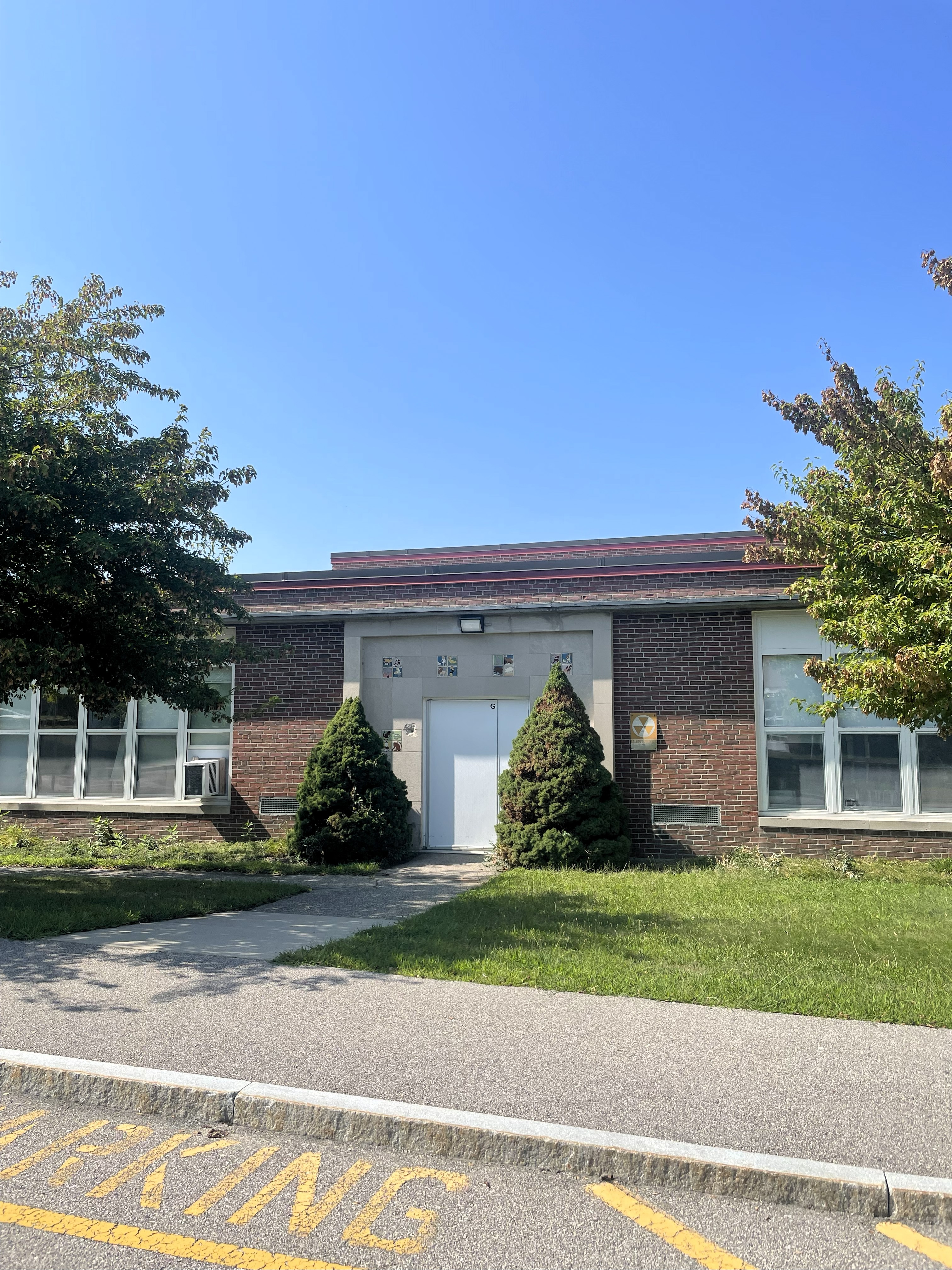
Just over the Quincy line is the Donald E. Ross School in the town of Braintree, and one exterior sign remained on the outside of the building.

Although Quincy had far more shelter locations and still has many signs up within the city, this is one of (if not the last) known exterior sign in the town of Braintree. The only other recent sign was at the St. Francis of Assisi School on Washington Street, but it was removed by 2012.

© 2025 Fallout Five Zero

Pictures taken on August 16, 2025 and owned by Fallout Five Zero.

Special thanks to the unknown resident of 200 Presidents Lane for providing information about the building.

And Just Like That, It Was Gone

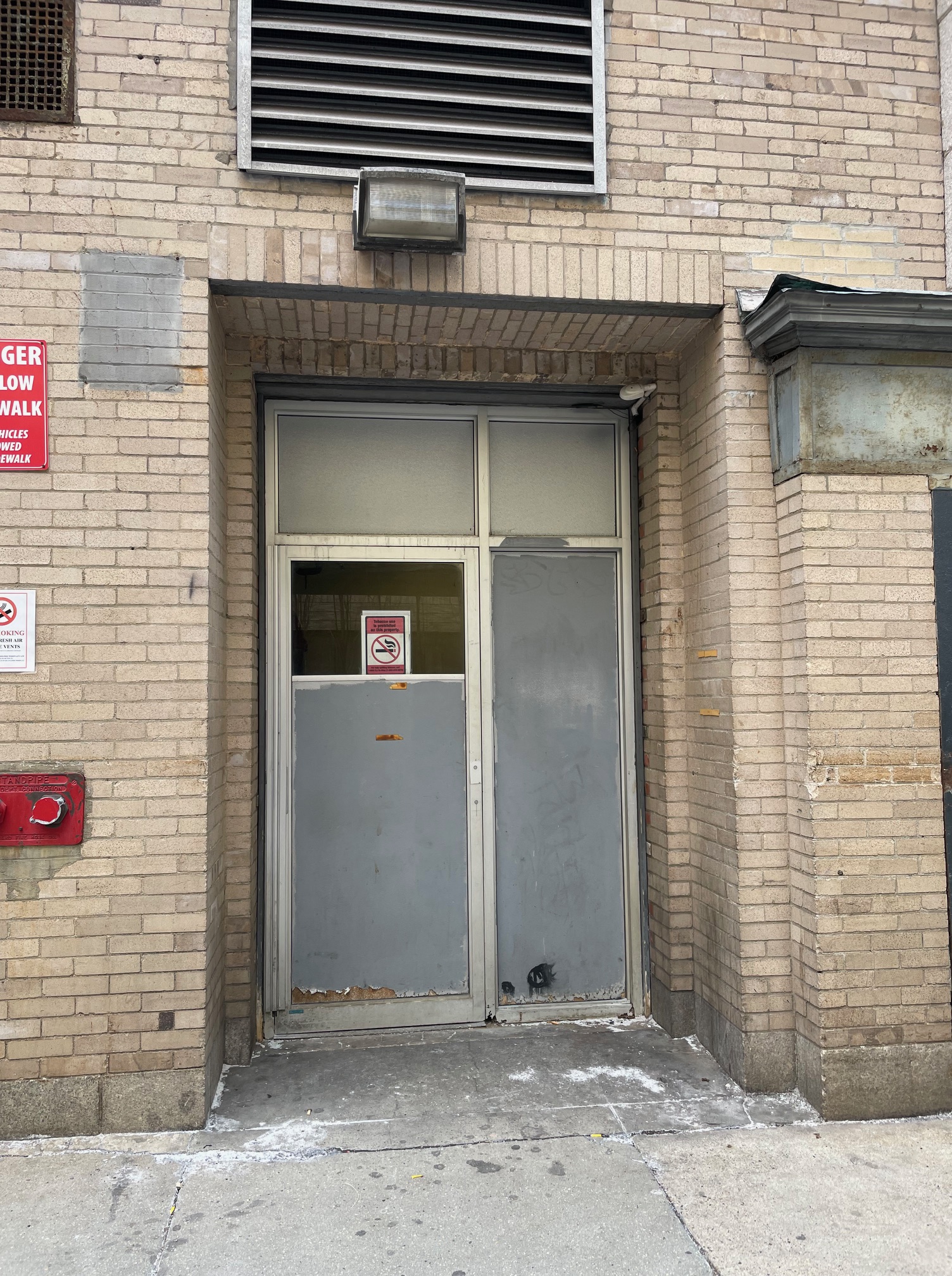
The picture on the left, taken around 2011, shows an exterior Fallout Shelter sign on the Hayward Place side of 600 Washington Street, a multi-use building on the edge of Chinatown.

The picture on the right was taken on February 2, 2025, and shows the sign has been removed. However, the sign had just been there a week or so before this picture was taken, so the removal was recent and the sign remained into 2025.

600 Washington Street was once a department store and formerly the Cinerama Theater, which remains abandoned inside the building. There were once 3 exterior Fallout Shelter signs, one on each side of the building except for the rear. There were also several interior Fallout Shelter signs, at least two of which remained as of 2017. As has been previously reported, time and age are not kind to these signs and many continue to be removed. Since this site began in 2014, 40 or more signs have been removed in Boston alone.

Fallout Five Zero will continue to promote their history, however, today and beyond.

© 2025 Fallout Five Zero

Pictures taken and owned by Fallout Five Zero

A Then Controversial Figure Walks Past A Once Controversial Sign

In this photograph taken by famed photographer Stanley Forman in September 1978, singer and controversial figure Anita Bryant walks out of the Copley Plaza Hotel and past a Fallout Shelter sign while in Boston to rally for Howard Phillips, who was running for U.S. Senate at the time.

Anita Bryant had been an outspoken figure and was specifically an opponent of gay rights. According to Mr, Forman, she had to be escorted by Boston Police to various events in Boston due to threats. Phillips ended up finishing fourth in the Democratic primary for Senate that year.

As for the Fallout Shelter sign, it had its own controversy when it was first developed in 1961 because many anti-nuclear activists believed it promoted the idea of war over disarmament and gave Americans a false sense of security. In many places in the US, including San Francisco and right at Harvard University in Cambridge (which Phillips attended), the signs were torn down multiple times. The one in this photo and many others, however, lasted many years beyond (it is now gone), and hundreds of signs are still up throughout the US, although they are coming down as time passes and buildings are rehabbed or demolished. Many were also removed over the past decade due to city governments not wanting people to think shelters still exist or can be used. New York City specifically took all remaining signs off their public school buildings in 2017 for the same reason.

© 2025 Fallout Five Zero

Photograph taken and owned by Stanley Forman and used with permission. Special thanks to Mr. Forman for use of the photo. More of his work can be found at his website https://stanleyformanphotos.com/

The Cab, The Sign, and The Siren

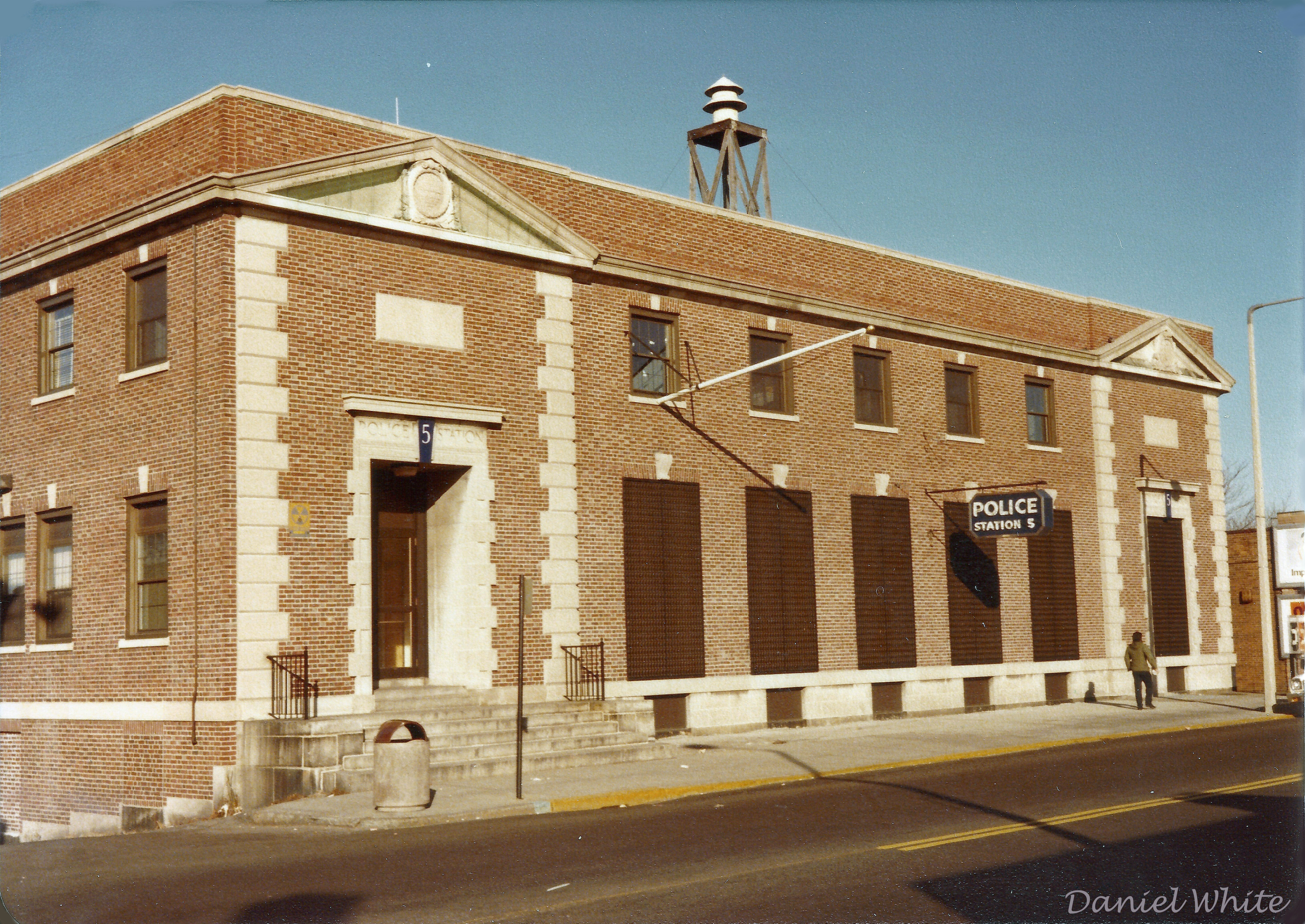
From the desk of our assistant editor Tim comes this screenshot from a WGBH Archives clip of Hyde Park from 1979. Pictured is Boston Police Station 5 (now E-18) on Hyde Park Avenue. On top of the station is one of several Federal Signal air raid sirens that used to be on top of buildings throughout the city.

To the left of the left entrance door is a Fallout Shelter sign, and passing the station is a Checker brand White Cab, which before ridesharing used to be the only hired mode of transportation in cities across the US outside of limos and livery cars.

This photo, taken by Daniel White in February 1980, shows a clearer picture of former Station 5, sans cab.

The cab, the sign, and the siren. All gone today.

©️ 2022 Fallout Five Zero

Screenshot from WGBH Archives, September 1979

Special thanks to Tim for finding and providing the WGBH screenshot and to Daniel White for permission to use his photo

Two sides, two signs, one store

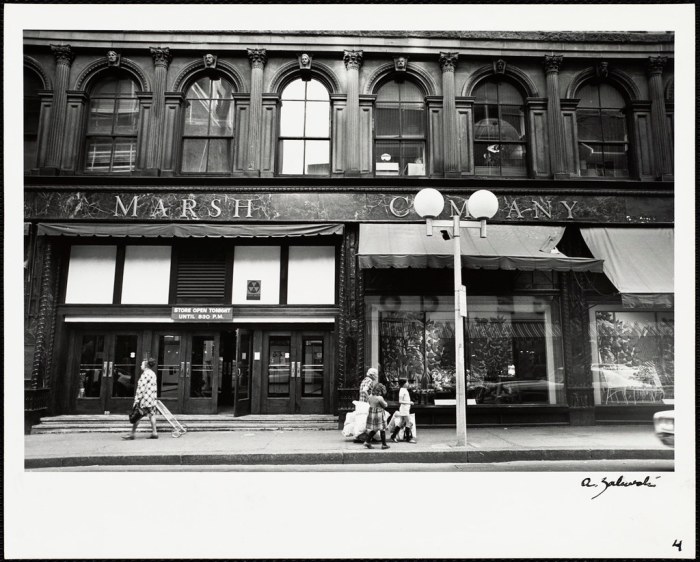
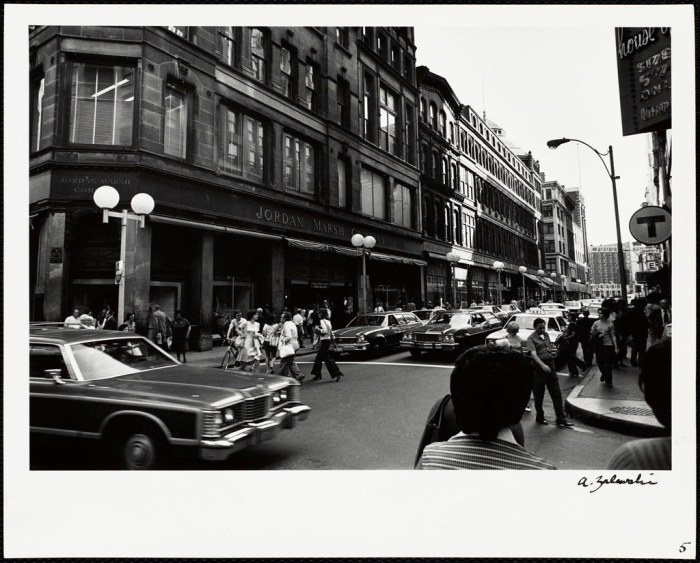
These two photos of Jordan Marsh in Downtown Boston (now Macy’s) taken by Andrew Zalewski in 1975 show two different sides of the building, both with exterior Fallout Shelter signs. The first photo faces Washington Street, and the second is the corner of Washington and Summer Streets.

The facade of the building has changed and both signs are gone; the then Jordan Marsh had a minimum of 2 exterior and 2 interior signs, for shelter areas in the basement and floors 2-5.

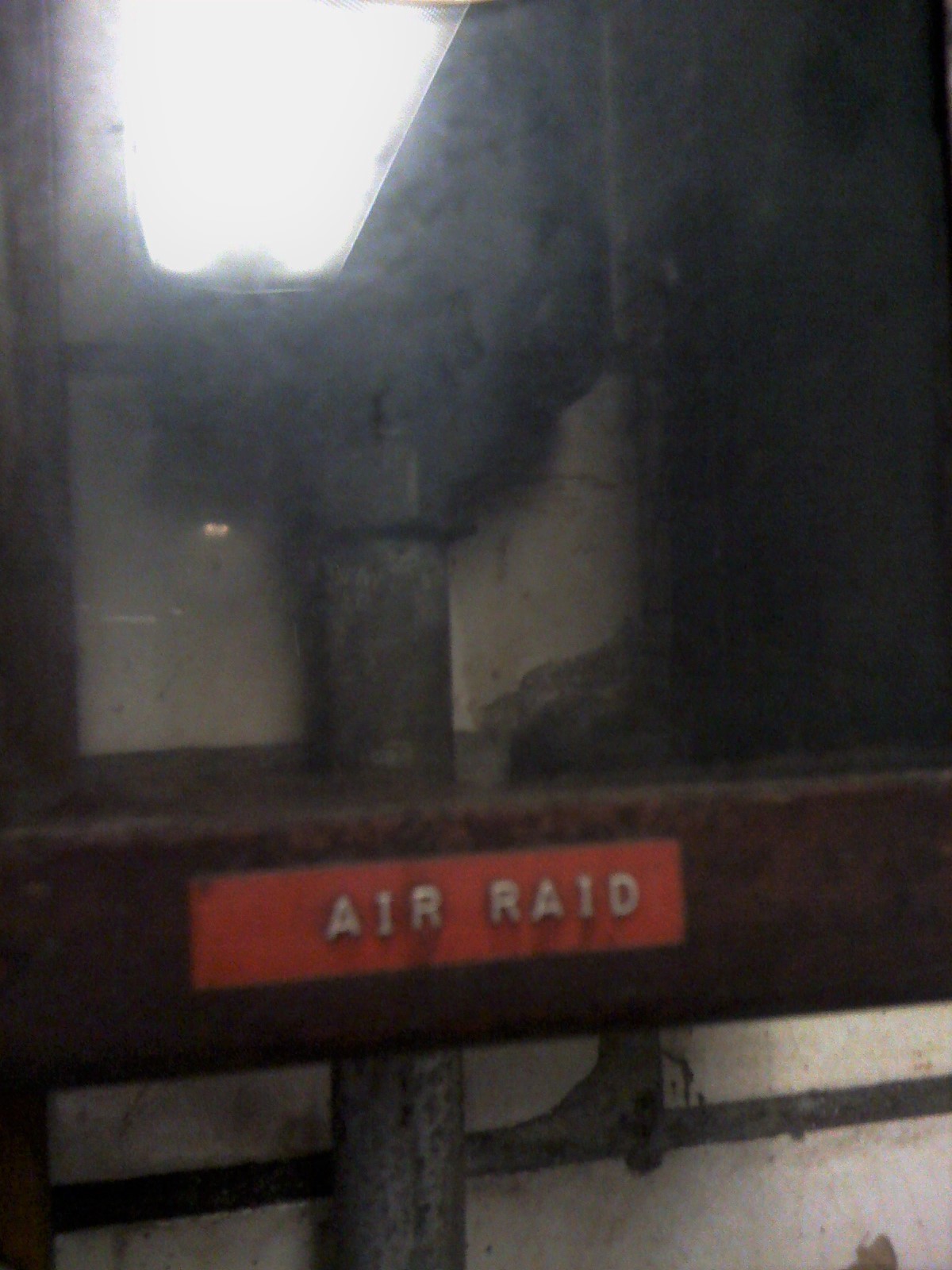
Only one sign remains, as seen below:

This interior sign inside the Summer Street entrance to the store is the only known remaining sign. The “FLOORS” overlay appears to have ripped off but the sign is in good condition otherwise. It hangs next to the store entrance as well as a set of private stairs likely used by store employees.

Another interior sign at the Chauncy Street entrance of the store was removed in the late 1990’s/early 2000’s.

No word if you only got fallout protection with a minimum purchase.


© 2019 Fallout Five Zero

Vintage photos taken by Andrew Zalewski in 1975 and shared from the Boston Public Library Flickr using Creative Commons licensing. No portion of either photo was altered in any way. 

Interior sign picture taken in December 2018 and property of Fallout Five Zero. 


When The Sirens Rang Over Boston

E51 Air Raid Siren Box E51 Air Raid Siren Controls

Starting in the early 1950’s, Boston once had an extensive air raid siren system. The Greater Boston Civil Defense Manual, published in 1952, stated Boston had 119 air raid sirens. In 1965, that number was at 132.

The above mentioned civil defense manual also stated that each siren could be operated individually, or from a central location, and all were tested on Fridays at noon.

The above pictures show the controls for one such siren. These were located at Boston Fire Department’s Engine 51 station in Oak Square, Brighton in the patrol desk area. These were taken in September 2009 (hence the quality, see below). However, the station underwent major renovations in or around 2011, and the controls (as well as the exterior Fallout Shelter sign) were removed.

The last known siren in the city came down in 2000, when the old Registry of Motor Vehicles building at 100 Nashua Street was demolished. Prior to that, many sirens had been removed when buildings were renovated in the 1980’s. It is unknown when the city stopped using or maintaining the sirens, although historical accounts have it somewhere around the early to mid 1970’s.

Editors note: These pictures were taken using the then technologically advanced, but now not so much iPhone 3G. Apologies for the very poor quality. 


Sitting, Strolling, and Reading in City Square

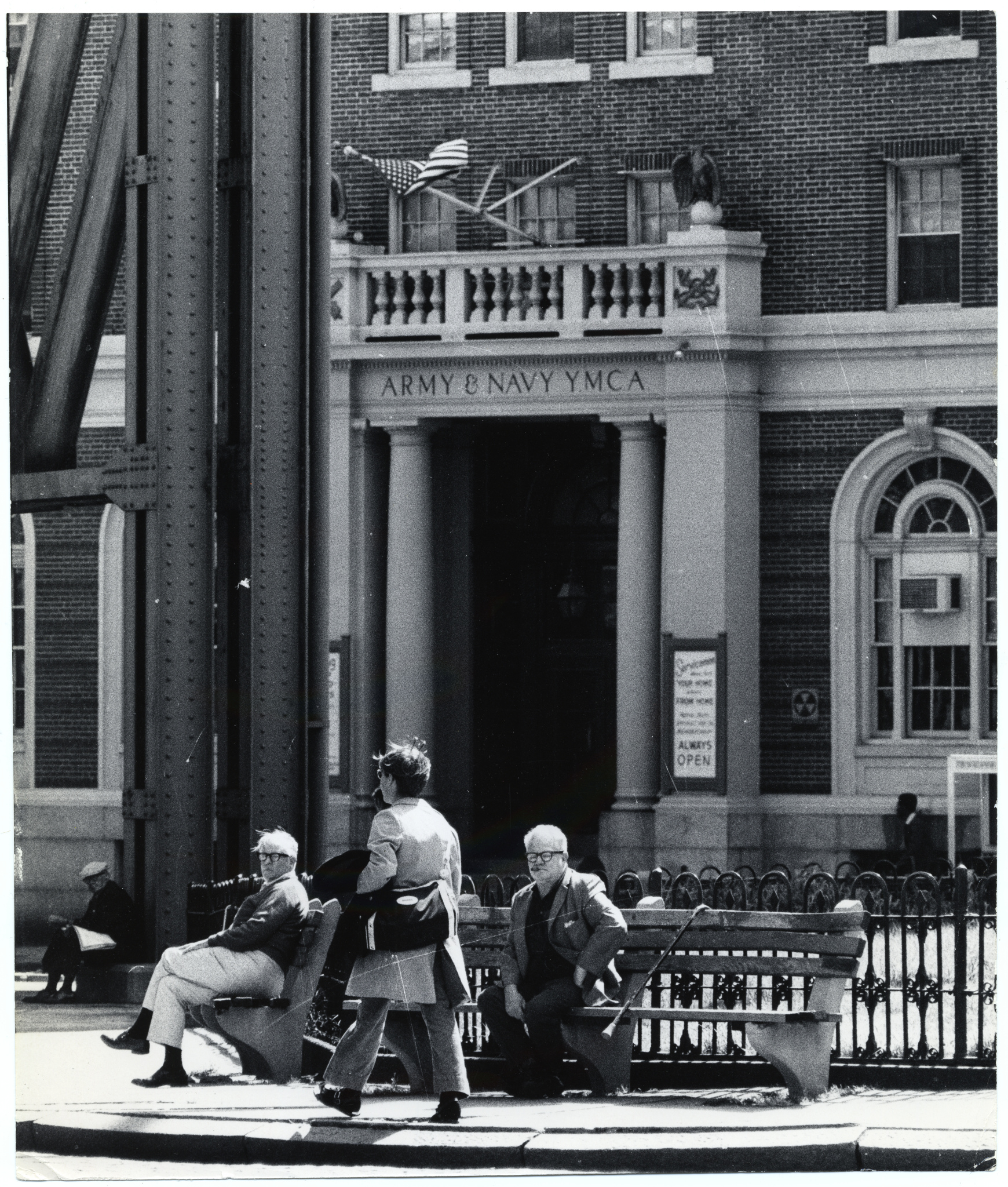
Army and Navy YMCA-Charlestown Massachusetts. Copyright City of Boston Archives

A woman strolls by as three men sit outside the former Army & Navy YMCA in Charlestown in this undated photo. A Fallout Shelter sign is posted on the wall to the right of the entrance. This building and it’s neighbors have since been demolished.

The above photograph is property of the City of Boston Archives and used under Creative Commons licensing. No portion of this photograph was changed or altered in any way.

Boston Civil Defense: Some Numbers

As the fallout shelter program took off nationwide, Boston’s Civil Defense Department was well involved, and as seen in documents published on the documents page, was marking, licensing, and stocking shelters all over the city.

Here are some numbers and facts about the program found in annual Civil Defense Department reports:

  • Around the end of 1962, Boston had licensed 240 shelters in the city.
  • By the end of 1963, that number was up to 1,062.
  • By the end of 1964, 1,147 buildings in the city had been licensed and marked. Of those, 482 were stocked with supplies.

As well, by the end of 1964, MBTA tunnels in the city had been stocked with enough food and supplies for 70,000 people.

In one year, it seems the program had slowed a bit. The end of 1965 saw 1,153 shelters marked and licensed, an increase of only 6 shelters from the previous year.  512 of the shelters had been stocked with supplies.

On May 11, 1965, two 200-bed emergency hospitals were established; one at Maverick Station in East Boston and one at Broadway Station in South Boston.

On July 7, 1965, 350 tons of food and medical equipment were stored at Andrew Station in South Boston for use in downtown department stores, to care for a total of 74,000 people. (It is unknown if these items still exist, or where in the station they were stored).

By 1970, the Boston Civil Defense Department had licensed 1,794 shelters and stocked 850 of them. As of now, this is the last year data was available.

As for the air raid siren system, a document from the Boston Civil Defense Department, dated November 29, 1965,  which was written to answer a questionnaire regarding Boston’s air raid warning capabilities, stated that 132 air raid sirens existed in the city at that time.

The last of the sirens came down in 2000 when the old Registry of Motor Vehicles building at 100 Nashua Street in Boston (also a fallout shelter) was demolished.

The list I have provided on this site only has, as of this writing,  just over 400 fallout shelter locations in the city (including many demolished buildings), so it is remarkable, at least to me, that some 700 more existed. Hopefully, time, effort, and tips will reveal the rest.

Fallout Five Zero

Sources: Boston Civil Defense Department Annual Reports, Document 9, 1961-1966, City of Boston Archives and Records.

John F. Collins papers, City of Boston Archives and Records

Boston Public Library, Roxbury: past, present, future

A Night At The Theater and I Know I’m Safe

As the national fallout shelter program got underway in the early 1960’s, public fallout shelters were marked in all types of buildings in Massachusetts. As long as the building or space met the criteria set forth by the Office of Civil Defense, it was marked as a fallout shelter.

Although certain types of buildings were very often seen as shelters (schools, municipal buildings, courthouses etc), generally due to their size and construction, some more unlikely places also served as shelters.

That included theaters.

11223219814_e6e6842381_bFormer Pilgrim Theater, 660 block of Washington St, Boston.
Copyright City of Boston Archives

As the photo above shows, the former Pilgrim Theater in Boston was marked as a fallout shelter (as was the adjacent doorway, which appears to be a separate shelter).

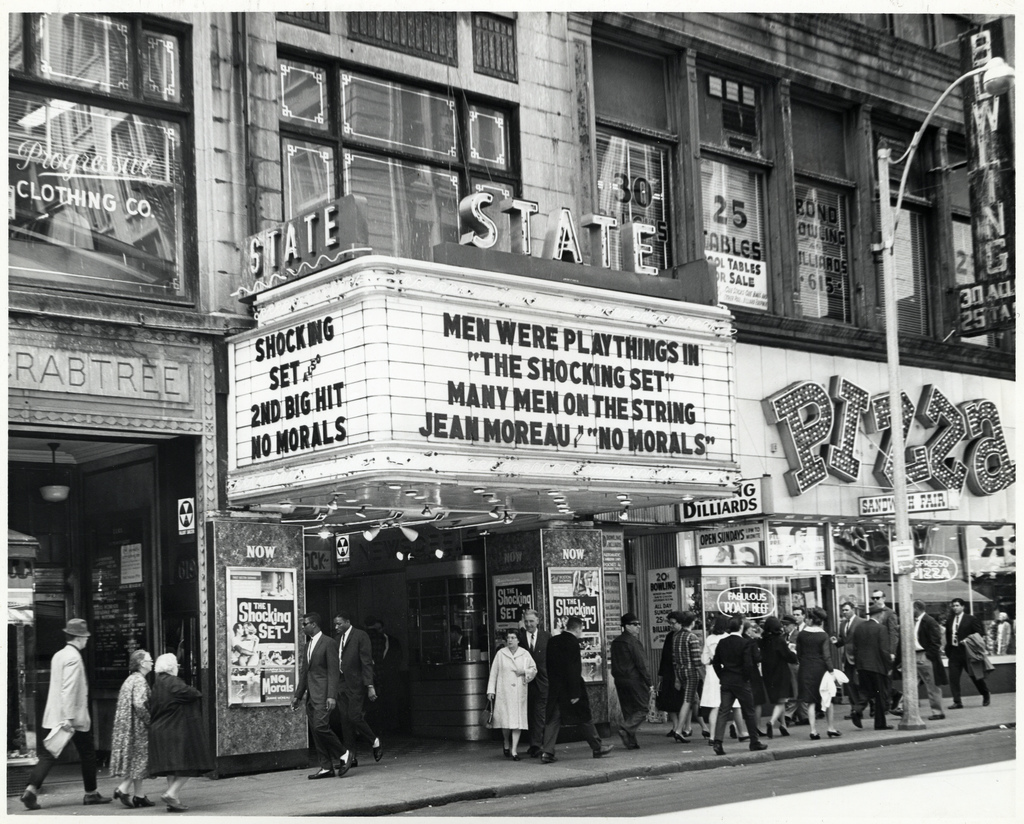
11191558024_ff88e833e4_bFormer State Theater, 617-619 Washington Street, Boston.
Copyright City of Boston Archives

This photo of the former State Theater also shows two shelter signs; one was for the theater, the other for the adjacent Crabtree Building.

11223350134_1302bd0664_bFormer E.M. Loews Theater, 690-692 Washington Street, Boston.
Copyright City of Boston Archives

One fallout shelter sign is seen on the former E.M. Loews Theater, under the “Center” marquee.

Of the three theaters shown above, only the building that housed the E.M. Loews Theater still remains (a Chinese restaurant now sits where the theater used to be). The other two buildings have been demolished, and the sign at E.M. Loews has been removed.

The Paramount Theater on Washington Street in Boston, the Wang Citi Center (formerly the Music Hall) on Tremont Street, and the Huntington Theater on Huntington Avenue were also fallout shelters. An exterior sign remains at the rear of the Wang, and one is on the front of the Huntington Theater. All the signs at the Paramount were removed before it was renovated to its current state.

In Quincy, the old Wollaston Theater on Beale Street was once a fallout shelter. The exterior sign on the front of it was just removed in late 2013; an interior sign also existed, but it’s current status is unknown.

Although no fallout shelters ever had to be employed for actual use, one can only imagine the mass confusion that might have ensued should a shelter in a theater been needed and a movie or performance was already underway.

Know of another theater that was once a fallout shelter? Contact us.

Fallout Five Zero

The above photographs are property of the City of Boston Archives and used under Creative Commons licensing. No portion of the photographs was changed or altered in any way. 

An Abnormal Revelation

While driving recently down Huntington Avenue in Boston, I went to pass the Mass College of Art, which is undergoing some construction. The building under construction is at 621 Huntington Avenue, and as the top frieze says, it used to be the Boston Normal School (and was later Boston State College, until that was absorbed into UMass Boston). The front facade of the building had been removed, and apparently, a fallout shelter sign had been buried underneath and was still hanging.

IMG_9287

After a few weeks, I went and spoke with the foreman and asked if I could grab some pictures and as well what they had planned to do with the sign. Surprisingly, he said they planned on reburying it with the new construction. At least if that’s the case, someone another 50-100 years from now will see it again. He entered the construction area and took these pictures.

IMG_9288

Although it’s covered in mortar and not in great condition, the capacity symbol is still intact and appears to say 923.

It’s rare to have a sign covered and uncovered during construction, and even more so to have them preserve it by covering it again.

Thanks to the unnamed foreman for obtaining the pictures.

UPDATE: In January 2015, a glass facade was finally put up over the old brickwork. Just prior to it being erected, the foreman was true to his word and the sign remained. It is presumed to have been re-buried, only to be rediscovered another few decades from now. 

© Fallout Five Zero