In The City of Presidents (and Nearby), Some Signs Lead to JFK

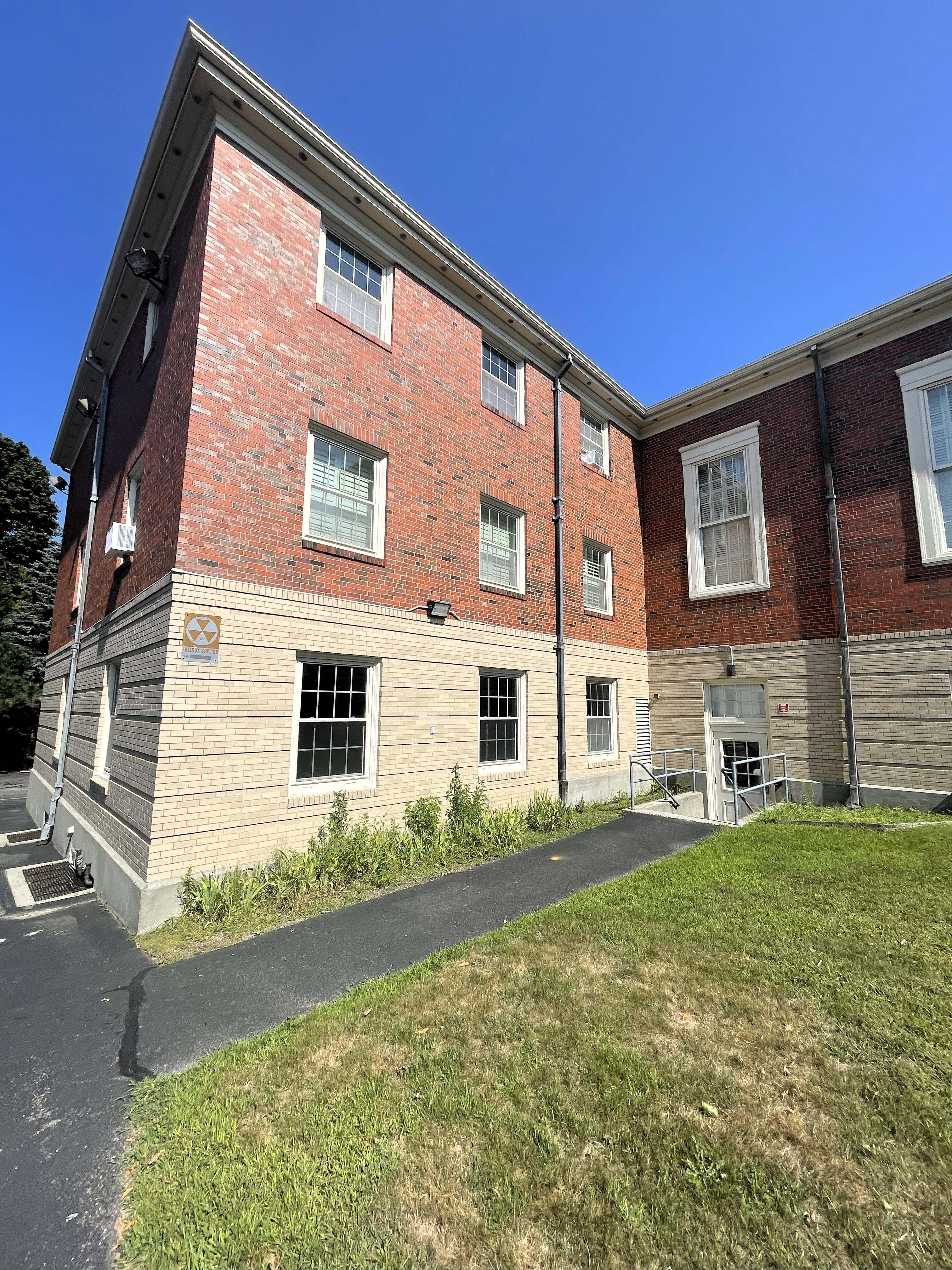
A question came in from someone who visited the site asking if a Fallout Shelter sign that had been on this apartment building at 200 Presidents Lane in Quincy was still there.

Quincy is a city of around 101,000 residents next to Boston, and known as the “City of Presidents” due to it being the birthplace of both John Adams and John Quincy Adams.

A visit revealed that the sign was still in fact there, on the left side of the building.

Although a straight-on shot was not possible due to the location of the sign, and the capacity is faded, a quick zoom-in looks like it reads 150.

A chat with a nice resident who was outside revealed that what was the shelter area in the basement is now laundry, and no interior signs remain in the building.

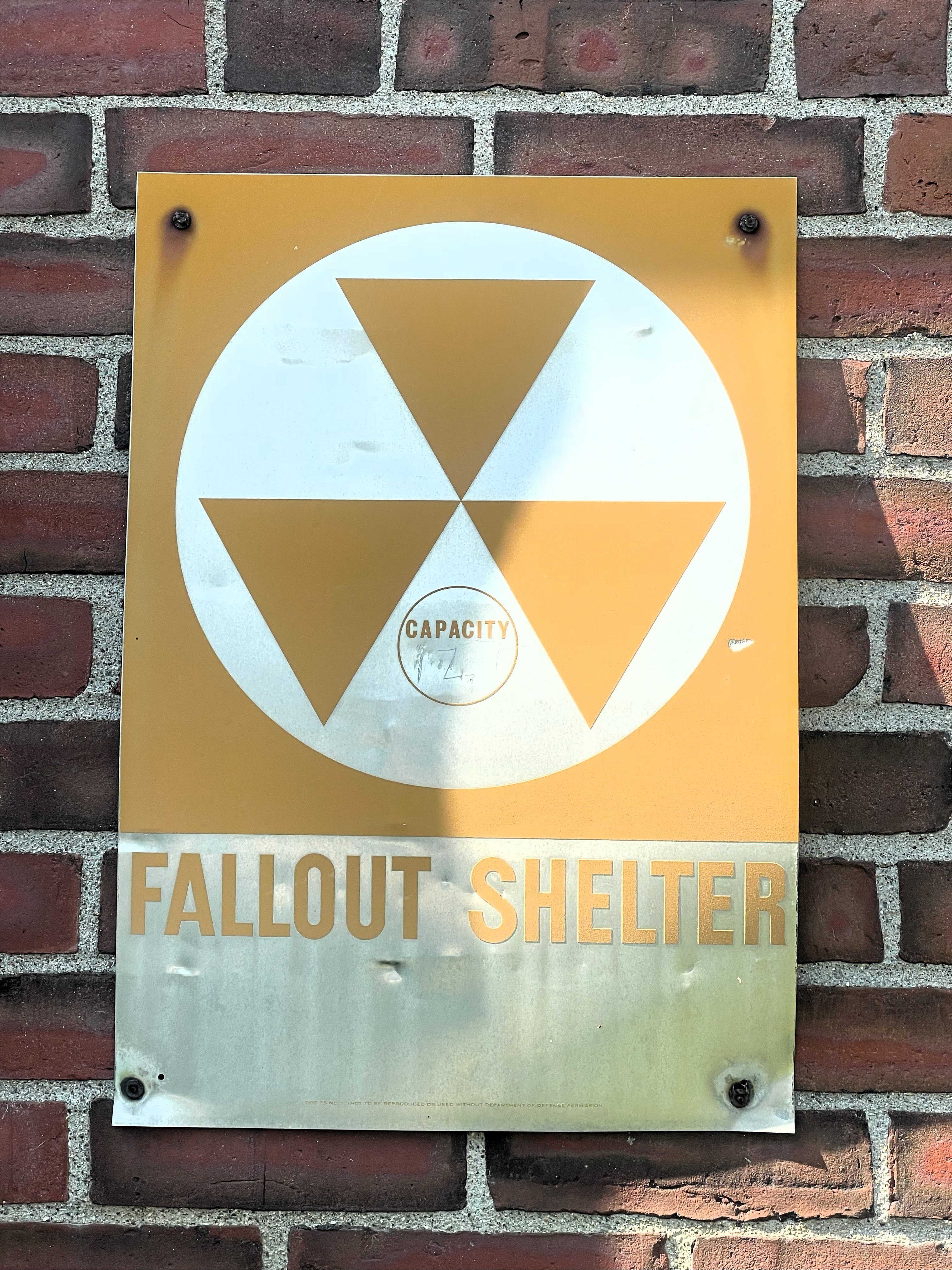
Not too far away, another exterior sign was seen at the First Presbyterian Church on Franklin Street.

The first number of the capacity was missing but the shadow appears to have been a 6, for a capacity of 60.

A quick walk around the building showed a set of stairs down to a basement door, but no other signs.

So, why the reference to JFK? It was President John F. Kennedy who, in July 1961, proposed a public Fallout Shelter program in the United States that would lead to the National Fallout Shelter Survey in September of the same year, and the eventual posting of these very signs (which were created by the Department of Defense, not Kennedy himself).

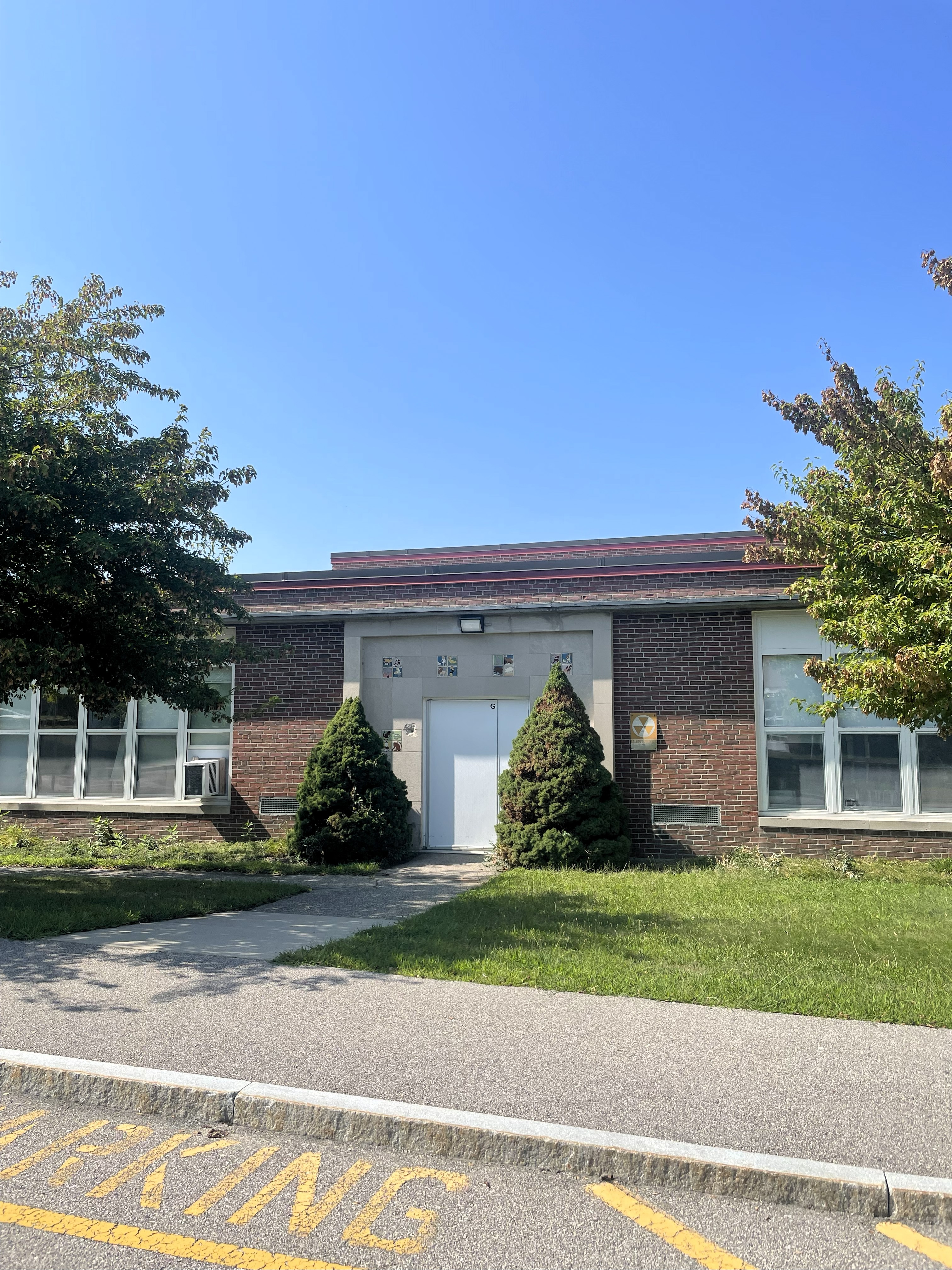
Just over the Quincy line is the Donald E. Ross School in the town of Braintree, and one exterior sign remained on the outside of the building.

Although Quincy had far more shelter locations and still has many signs up within the city, this is one of (if not the last) known exterior sign in the town of Braintree. The only other recent sign was at the St. Francis of Assisi School on Washington Street, but it was removed by 2012.

© 2025 Fallout Five Zero

Pictures taken on August 16, 2025 and owned by Fallout Five Zero.

Special thanks to the unknown resident of 200 Presidents Lane for providing information about the building.
Makes You Wonder What The Other Sign Would Have Looked Like

The National Fallout Shelter Survey, which began in September of 1961, brought the Army Corps of Engineers and civilian architects and engineers who were put through Civil Defense training classes around the country to survey existing buildings to see if they would be feasible as public Fallout Shelters.

To be selected as a shelter, the building had to meet three criteria:

-Protection Factor of 40 (meaning a person would receive 1/40th the radiation inside the shelter than he or she would outside without protection. Noted below and in official documents as “PF.”)
-Room for at least 50 persons
-10 square feet of space per person

Once the survey was underway, buildings that were identified (and licensed if they were private) were marked with the official Fallout Shelter sign, and in some cases stocked with civil defense rations and equipment. As we have featured on our site in the past, the first shelter marked in Massachusetts was The Massachusetts State House in a ceremony that took place on November 5, 1962.

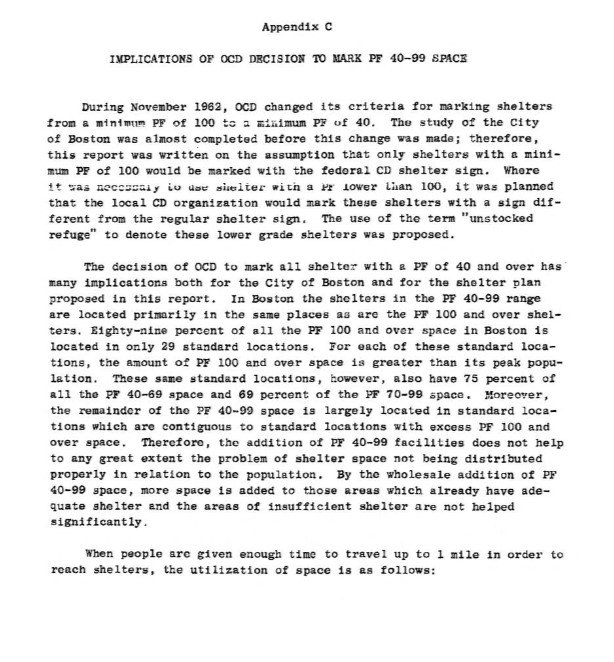
However, this document above (and linked below) from a 1963 shelter study done by the Stanford Research Institute for Boston shows that the original plan by civil defense officials was to only mark shelters with a PF of 100 or more, and mark any shelter with less than a PF of 100 with a differing sign, possibly with something saying “unmarked refuge,”

In the 155-page study, the difference between PF 100 and PF 40 shelters is discussed, as well as the percent of which type of shelter would be occupied day and night and the fact that the shelters that were stocked were at least PF 100. There are also maps showing where potential shelters in Boston were, although it is not differentiated by specific location, just dots marking potential shelter sites within various Boston neighborhoods.

It is interesting to know that we may have seen a sign other than the one we are used to (and this site is dedicated to), though I’m glad they decided to stick with the one.

© 2024 Fallout Five Zero

Document retrieved on January 28, 2024, from archive.org